Friday, September 30, 2016

INDIGENOUS KNOWLEDGE AND CULTURAL RESPONSIVENESS

Cultural responsiveness can be seen in the way that we as teachers interact with our students and how we interpret and acknowledge their beliefs and past experiences. We must also be confident in our own beliefs while being receptive to new learning and reciprocal learning alongside our students.
I believe that as cultural competent teachers we must be able to use a learners past to benefit their learning. Allowing a student the opportunity to engage in a context by providing opportunities or briefs for them to build upon and create a passion for learning. We must build relationships with our learners and create an environment of trust. Asking questions without probing, having a sense of passion, remembering names and pronunciation, giving students the opportunities to guide and teach and seeking feedback and valuing opinions.

As a school with 35% of our students coming from Maori decent, we employ a range of strategies to integrate Kaupapa Maori values into our school culture. One of our main school goals has been a focus on raising Maori achievement. This has included frequent Whanau information evenings for family to better understand what their daughters are going through with the expectations of NCEA, workload, time management and credits. We are working on Increasing Maori achievement through raising staff levels of culturally responsive and relational pedagogy (CRRP). As a school we have realised the importance of this goal, and have been provided with additional support which we are already benefiting from. At the beginning of the year a staff meeting was held in the Whare and the HOD Maori explained that to live in Aotearoa meant we all had ownership and responsibility for Maori and protecting the land and sea. The students spoke of how it felt to be Maori in the classrooms and some of the things that make a difference to them. This resonated with a lot of our staff and as a result we seen some positive actions taking place within the school.

We are working closely with Kia Eke Panuku, using Rongohia te Hau to establish our base level and what the next step would be, which turned out to be a need to increase student centred teaching.  The Rongohia Te Hau tool is one of the most effective ways of taking a snapshot of where we are at, and the co-construction of findings for this was invaluable. The facilitators have been working with a range of teachers to implement the peer Rongohia Te Hau tool which will be of great use and they are fitting in with where we are at and our needs and have offered to help us in any way they can. We are very much enjoying working with them and appreciate their input and good questioning. Many HODs present at this PD opportunity could see it as being an invaluable tool for having observation conversations with staff looking at becoming more culturally responsive in their practice.
For our students we have implemented the Aim High (renamed ART programme) for the At-Risk year 12 students with an emphasis on increasing Maori achievement. This group is getting stronger each year, with students being identified much earlier, from hard achievement data and teacher referrals. There are 58 students on the programme who have all identified a key staff member that they’d like to work with. That person works with whanau, the student and Ngati Wai. Training has been be given to these staff and a whanau evening was held to learn more about the programme, ask questions and for everyone to meet and have input into it.
Mana Kaitiaki is another student group initiated by past prefects. These girls look to support one another through mentoring and relationships, they received training and are being well supported by senior staff, MOE facilitators and Ngati Wai iwi.

Being a cultural responsive school our students have created and developed a school karakia called Te Timatanga, This was a completely student driven initiative by our Head Girls, and inspired by Justice Hetaraka’s (WGHS Prefect) initial proposal/initiative to normalise Maori Culture within the school, and to create an inclusive and comprehensive learning environment for every student.
The girls launched the initiative during Matairiki, with a whole school recital, and various musical acts, followed by a balloon release to symbolise the “New Beginning”. Students were also asked to write a positive personal affirmation, with these being collected in to be mulched, and utilised in planting a tree which will stand in WGHS for many years to come, as a reminder of our culture and spirit.

Te Timatanga 'The Beginning'
Horahia te marino
Kia aio te ra
Manaakitia nga whanau
Me ratou e mauiui ana
E rawakore ana
Uhia mai o tomairangi atawhai
Ki runga i a matou
Hei ako pai I nga mahi mo tenei ra
Kia papapounamutia te huarahi
Ki mua I a tatou
Whakamama nga wahine I apopo
Tihei mauri ora
Shower serenity upon us
Guide our families and people in need
Cover us in love and care
So that it may reflect in our learning
Guide us through our daily endeavours
To empower tomorrow's women
Be healthy, be happy, be safe
We are fortunate within the Technology and Arts departments, in that we can set very broad design brief where students are required to incorporate their own stance, culture, opinions and values. Students are encouraged to build on previous experiences, interests and backgrounds, with the hope that they personalise and engage with the context of the brief. For example, my 11DVC class we were looking at Jewellery Design, incorporating an environmental or cultural issue. One of my Maori students chose to symbolise the stingray, representing the protection of shellfish, she portrayed this through the design of a cuff bracelet worn around the wrist.
We believe that through building relationships with our students we can encourage them to create design ideas that are meaningful and of interest. This ability to provide opportunities for student lead learning is invaluable for us as a staff as we find ourselves in a constant state of learning, learning about our students and their varying cultures.
Being culturally responsive is something we have to acknowledge and actually work on, for some of us it does not come naturally, however in order to move forward and support our students to be the best they can be, we need to keep working on it.

References
Bishop. R., Berryman, M., Cavanagh, T. & Teddy, L. (2009).Te Kotahitanga: Addressing educational disparities facing Māori students in New Zealand. Teaching and Teacher Education, 25(5),734–742.
Blank. A., Houkamau. C & Kingi, H. (2016) UNCONSCIOUS BIAS AND EDUCATION - A comparative study of Māori and African American students. http://www.antonblank.com/uploads/2/6/4/6/26465847/unconsious-bias-and-education.pdf
Tātaiako - Cultural Competencies for Teachers of Māori Learners: A resource for use with the Graduating Teacher Standards and Practising Teacher Criteria

Creating culturally responsive learning environments and contexts for all akonga

Kia Eke Panuku – Building on Success

Monday, September 26, 2016

The Broader Professional Context

As a lead technology teacher of Northlands largest all girl’s secondary school, I have grave concerns about the proposal to fully integrate Digital technology into the New Zealand Curriculum and Te Marautanga o Aotearoa in 2018.


Education Minister Hekia Parata announced the change to the New Zealand Curriculum back in July this year, proposing that digital technology would be integrated across all levels of the curriculum, with the intention that it would support young people to develop skills, confidence and interest in digital technologies and lead them to careers and opportunities across the IT sector.

"The information technology sector is one of the fastest growing sectors in New Zealand, with a demand for skilled graduates. This step will support young people to develop skills, confidence and interest in digital technologies," Ms Parata said.

Digital Technology needs to be taken seriously according to Chief executive of Orion Health, Ian McCrae Concerns, our children need to be able to competent in English and Maths, but if we are not preparing them to be technically literate we are not equipping them for the future.

Employment prospects for people with digital technology skills are excellent. It's been estimated that the number of digital/ICT jobs will grow by 23-53% over the next decade, and many software development companies are already struggling to recruit staff. However, it is not just the digital skills our students will require in the future, they will also need to be adequately prepared with the 21st century skills of creativity and innovation, critical thinking, communication and collaboration.

Education systems around the world are already doing this, in England the principals of computer programming have featured within the curriculum for children from the age of five or six, since 2014. While earlier this year in the US, President Obama launched Computer Science for all, which aims to provide pupils from kindergarten to high school with programming and coding skills. Is NZ moving fast enough?
So what are the concerns?
A lack of skills and time, a lot of our staff in schools are not adequately trained to deliver a digital technology program. The Digital technology program within secondary schools has changed dramatically over the last 20 years, they have had to move from teaching typing skills, to Microsoft Office, power point, word and excel. They are now expected to understand and deliver knowledge of algorithms, programming, data representation, digital devices and infrastructure, digital applications and humans and computers.
Our staff need professional development and time to implement this new knowledge. I cannot see IT professionals prepared to enter the teaching profession, with pay cuts, appraisal expectations, workload etc, it doesn’t sound particularly enticing. We have to work with what we have and in order to do this we have to train and support our existing staff.
A pedagogical shift in thinking is required, moving away from teacher centred teaching and learning to student centred learning. We need to stop worrying about assessment and results, moving towards student lead projects in context, learning alongside the students, individual programs and cross curricular links. Learning that reflects what happens in the real world, not in silos!

Parents and caregivers are always concerned about the time children spend on devices and cyber bullying. We cannot protect our students from the real world by locking down access to social networking sites at school, most have access to it through their own data and at home. What we do need to do is teach our students to be good citizens, responsible people and make them aware that what the post or comment on, is there for ever as a digital footprint.
They are still a lot of parents concerned that the education system is not equipping their children with the literacy and numeracy they need, and that we should be going back to basics. However, with a great curriculum all skills could be delivered through a cross curricular context.

What about beyond 2018?
According to the Digital Technologies in School 2014 Report, Secondary schools were significantly more likely than primary schools to report they were using the following future-focused learning applications: digital textbooks (39 percent and 23 percent, respectively), Khan Academy (49 percent and 31 percent, respectively, and learner analytics (13 percent and two percent, respectively). Hence, as the curriculum changes, more and more primary schools will be exploring the above mentioned skills resulting in students coming through the secondary system having already experienced most of the current available technologies, and as teachers we will have to constantly upskill in the latest technologies in order to support and work alongside our students as they will become more knowledgeable than ourselves.


References:
Adams Becker, S., Freeman, A., Giesinger Hall, C., Cummins, M., and Yuhnke, B. (2016). NMC/CoSN Horizon Report: 2016 K-12 Edition. Austin, Texas: The New Media Consortium

Digital Technologies in School - 2014 Report, October 2014. PREPARED FOR 2020 Communications Trust. PREPARED BY Mark Johnson, Annita Wood, Pip Sutton

Digital technology to become part of the New Zealand Curriculum and Te Marautanga o Aotearoa

Trends Shaping Education 2016
http://www.keepeek.com/Digital-Asset-Management/oecd/education/trends-shaping-education-2016_trends_edu-2016-en#page1


Evaluation at a Glance: Priority Learners in New Zealand Schools http://thehub.superu.govt.nz/project/evaluation-glance-priority-learners-new-zealand-schools

Your Professional Context


Whangarei Girls’ High School is a decile 5 school with 35% Maori. As a school we draw from a wide range of SES. Rural and small city industries.
Whangarei Girls High School is a large secondary school with strong links with its local and wider Northland community. The student roll reflects the cultural diversity of the community and includes 35 percent who identify as Māori. As one of the largest schools in the North with a boarding hostel, we draw from a very large area, from the Brenderwyns right through to the Far North. We have a large number of students who do not, or opt not to, be prepared with stationery and/or food. They also struggle to conform to our uniform and expectations of a relatively traditional environment.

At WGHS we have a school motto, “empowering tomorrow’s women” which can be summed up by this statement: We provide opportunities for our girls to be outstanding young women who leave us ready for the next step in their lives. The culture currently within our school is about student achievement, inclusion and connected relationships. Within our department we hope to encourage our students to be creative and to take ownership of their learning, where design thinking can be integrated and applied in context. We provide opportunities for students to see the cross curricular connections between subjects and put their learning into context.

As a school we endeavour to create an environment that is safe and student centred. We are moving towards a digital tech culture, in that we are fast approaching a BYOD roll out at Yr 9 and 11, as well as a focus on being culturally responsive in our practice.

(Stoll) talks about old schools being harder to change and install new ideas. This is evident in our traditional setting in that we have large solid foundations, and a few long serving staff members.
Teaching for me has changed over the past few years, no longer do we just teach in our own personal silos, we are constantly being exposed to new technologies and new pedagogies in teaching practices which are exciting and in need of implementation. Our students are coming through from intermediates more knowledgeable and adventurous and as teachers we are constantly having to upskill, students are pushing the boundaries and student outcomes are getting more complex with a higher quality finish.  Staff within my department are receptive to change, however, as a school I am unsure if we are ready due to obstacles/barriers, such as physical spaces, protection over learning areas, timetables, assessment, technology and the unknown.

Timetable is a barrier within our school, and although I am a member of the timetable group, I am constantly battling issues such as equal time allocations across learning areas. We are unable to move beyond this barrier, as the thought of cross curricular, long periods of time and integrated learning, falls into the too hard basket, baby steps…

One good thing that could have come out of this group, could be the opportunity to trial a cross curricular Yr9 group, where the teachers of 9Kiwi for example, come together at the beginning of the year/regularly, to plan units, remove timetable restrictions and trial integrated assessment, as they should only be bound by the constraints of the option subjects. Implementing change and new initiatives within a traditional school must be very different from a newly established school, where they have time to set up, they can pick and choose like-minded staff and have open learning spaces.  Change will be good for WGHS, however we need to have the early adopters on board, staff have to want to be part of the trial or it will not work.

As a school I think we need to prepare our students for the future, a future that we are not even prepared for. Skills of the 21st century, such as the ability to collaborate, be creative and innovative, critical thinking and communication can be taught in our classrooms. Teaching students in separate learning silos, where cross curricular links are not clear is something that needs to be rectified in our school, and if it can be trialled and done well, hopefully the laggards will see the benefits and come on-board.

Our senior leadership are on board with change, however it will take time. A pedagogical shift in thinking is required in order for change to happen. The move from teacher centred to student centred will be the first obstacle to tackle. This is a focus, and as a staff we have applied initiatives such as Kia Eke Panuku to raise CRRP by using Rongohia te Hau, thus resulted in a need to increase student centred teaching across the school. Some of us have also had the opportunity to work with Megan Peterson from the Evaluation Associates with an emphasis on inquiry, student centred teaching, good assessment practice and increasing leadership capacity in middle leadership.

Kraft, M.A. & Papay, J.P. (2014). Do supportive professional environments promote teacher development? Explaining heterogeneity in returns to teaching experience. Educational Evaluation and Policy Analysis, 36(4), 476-500.
Stoll, L. (1999). School Culture. School Culture, (9), 9–14. Retrieved from http://www.educationalleaders.govt.nz/Culture/Understanding-school-cultures/School-Culture

Saturday, September 3, 2016

Communities of Practice

Wenger describes a Communities of practice very simply as a group of people who share a concern or a passion for something they do and learn how to do it better as they interact regularly. With this in mind I can see myself belonging to multiple communities of practice. However the community I relate to most is being part of a progressive department, who have a shared domain of interest within design & technology.
As a department we are very proactive towards change and implementation of new initiatives. We are constantly looking for new and improved methods or ideas to inspire and engage our students through relevant contexts, new technologies and shared passions. Through regular morning tea meetings, Facebook, Edmodo, Twitter or Pinterest we collectively share ideas and resources. These ideas can then be discussed between smaller groups and brought back to the larger group once trialled or tested. Staff are encouraged to share best practice, what worked, what didn’t work, as well as seeking student voice and reflecting on programs, resources assessment strategies etc.
A key difference in the way our department works is due to transparency, in that our classrooms are open spaces, where staff and students feel free to move between spaces and feel confident and able to seek feedback/feed forward from anyone. Resources are shared across spaces, and although we have specialist classrooms the students know that if they need an expert from a different space that they can move to where they need to be.
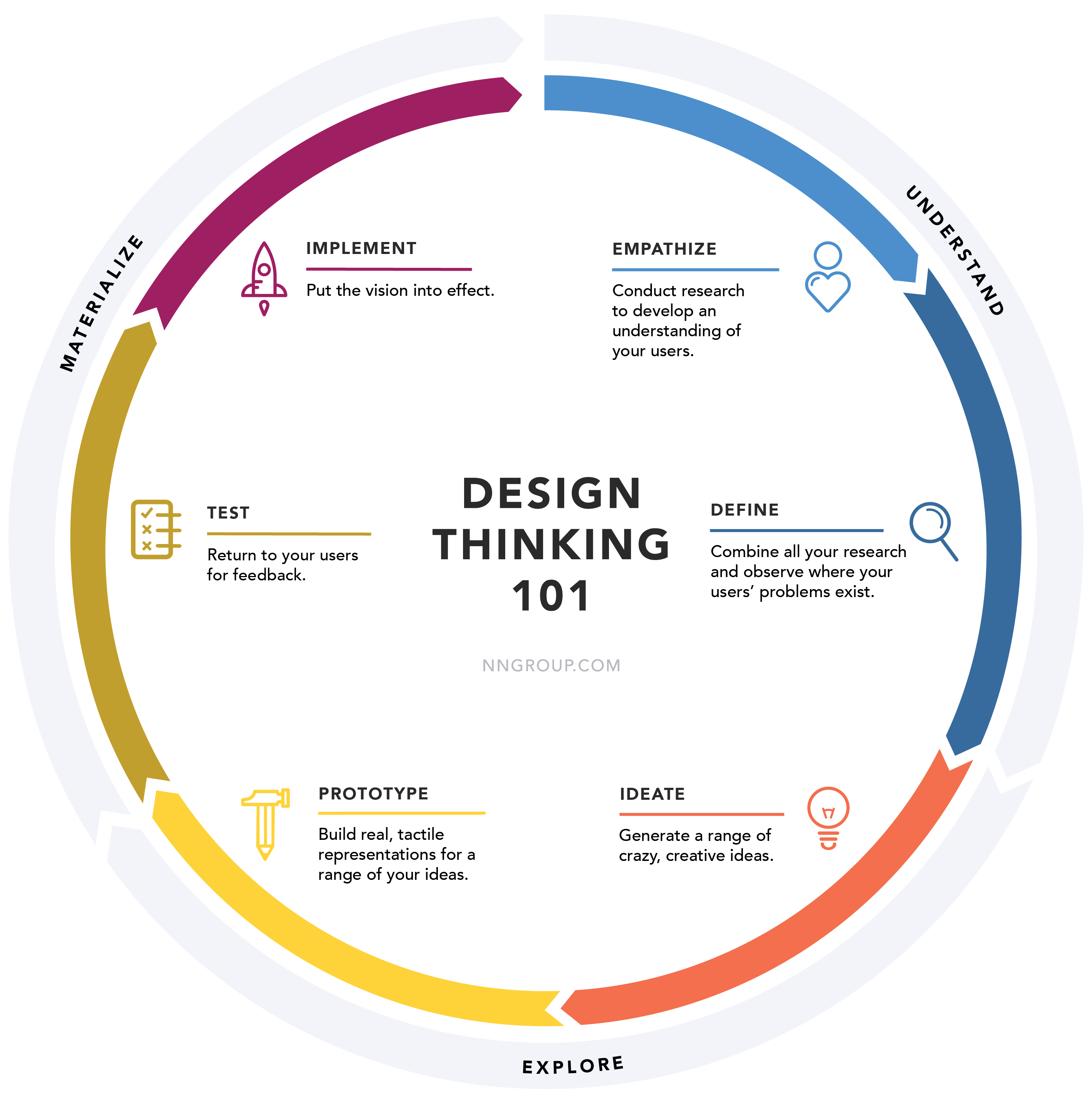
One of the key focuses within our department and possibly as a direct result of the Mindlab, has been the emphasis on 21st century skills, as we believe that through the technology curriculum we can effectively deliver all skills required by our learners as they move through the education system. Design thinking has a natural link to creativity and innovation, which is a key focus within our department, as is the process and allowing students the time to test and prototype their design ideas with the knowledge that failure is ok, it’s all a part of learning, resilience and perseverance etc.

Image result for design thinking

A resilient 21st century learner works to find out what works and bounces back from failure. You must have a willingness to accept that a problem has multiple solutions and develop your ability to try again. Design thinkers learn from their mistakes so they can develop a better solution next time. Dr. Maureen Carroll

As a member of this community and in my role as the HOD, I see myself as an initiator of ideas, I like to sow the seed and then sit back, as others take on board ideas, expand on them, develop them, reflect on and then bring back for further sharing. I am an enabler who allows staff members to see, do and create new ideas, creating links with the community, seeking funding and new technologies etc.  
On the flip side of this though, I am also receptive to new initiatives, links and ideas from my colleagues, we do a lot of team teaching, sharing of resources, spaces, exemplars and assessment practices. I am a learner alongside my students and staff, I do not see myself as the holder of all knowledge and in a subject area like ours where the content is changing so fast with new technologies, we could never be that person. But we can provide advice, guidance, encouragement and support to our students and staff in order to set them in the direction to seek further knowledge and enabling everyone to take ownership of their own learning.